
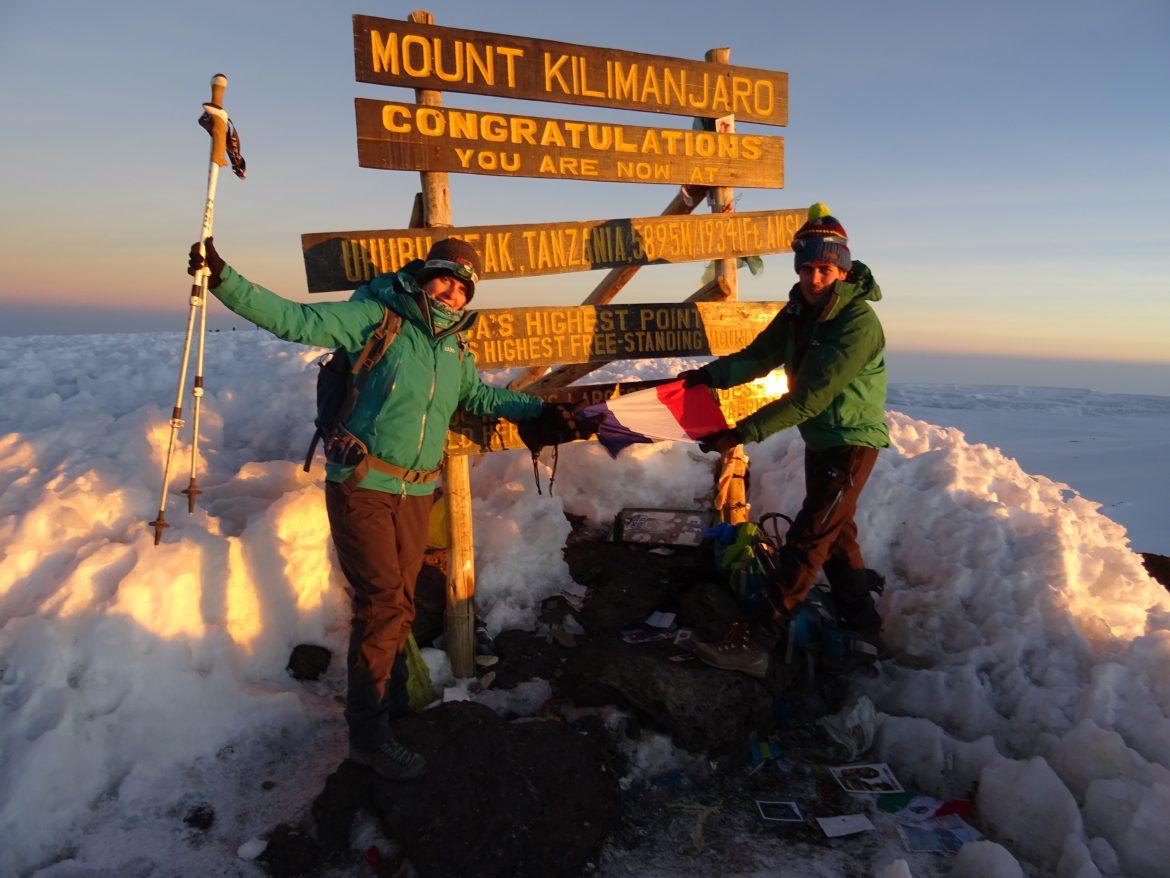
CLIMB MOUNT KILIMANJARO
Reach the Roof of Africa
Climb Tanzania’s highest mountain and stand on the summit of Africa.
At 5,895 metres (19,341 ft) above sea level, Mount Kilimanjaro is Africa’s highest mountain and one of the world’s most iconic trekking destinations.
You don’t need to be a professional mountaineer to climb Kilimanjaro. With the right preparation, a suitable route, experienced guides and enough time for acclimatization, many physically fit travellers can reach the summit.
At Kilimanjaro Travel & Tours, we combine experienced mountain crews, carefully selected routes, responsible trekking practices and personalized support to help you experience Kilimanjaro safely and meaningfully.
WHY CLIMB KILIMANJARO?
Kilimanjaro is more than reaching a summit.
It is a journey through several ecological zones—from cultivated farmland and rainforest to moorland, alpine desert and the icy summit of Uhuru Peak.
5,592M
Africa’s Highest point
7
Main Trekking Routes
5
Major Ecological Zones
1
Unforgettable Summit
Choose Your Kilimanjaro Route
Different routes offer different landscapes, levels of difficulty, traffic levels and acclimatization opportunities.

MACHAME ROUTE
The Scenic Route
Typical duration: 6–7 days
Machame is one of the most popular routes because of its spectacular scenery and varied landscapes.
Best for: Travellers looking for beautiful scenery and a challenging trekking experience.
Highlights:
- Rainforest
- Shira Plateau
- Lava Tower
- Barranco Wall
- Karanga Valley
- Barafu Camp
- Uhuru Peak
LEMOSHO ROUTE
The Scenic & Gradual Route
Lemosho approaches Kilimanjaro from the west and provides an excellent acclimatization profile with beautiful scenery.
It is an excellent choice for travellers who want a longer trek with more time to adjust to altitude.
Best for: First-time climbers, photographers and travellers prioritizing acclimatization.
NORTHERN CIRCUIT
The Longest & Most Gradual Route
The Northern Circuit takes a quieter route around the northern slopes of Kilimanjaro.
Its longer itinerary provides more time for acclimatization and allows trekkers to experience a less-travelled side of the mountain.
Best for: Travellers who have enough time and want excellent acclimatization.
MARANGU ROUTE
The Classic Route
Marangu is the only Kilimanjaro route where trekkers sleep in mountain huts rather than tents.
The route approaches the mountain from the southeast.
Best for: Travellers who prefer hut accommodation.
Important: Its shorter itineraries allow less time for acclimatization, so a longer itinerary is generally preferable when available.
RONGAI ROUTE
The Remote Northern Approach
Rongai approaches Kilimanjaro from the Kenyan border side and is known for quieter trails and a different landscape from the southern routes.
Best for: Travellers seeking a quieter route.
UMBWE ROUTE
The Adventure Route
Umbwe is a steep and demanding route with rapid elevation gain. It is generally better suited to experienced trekkers who are comfortable with challenging terrain.
Best for: Experienced hikers seeking a more demanding adventure.
SHIRA ROUTE
The High-Altitude Approach
The Shira route approaches Kilimanjaro from the west but begins at a relatively high elevation.
Because of the rapid initial altitude gain, it is generally less suitable for travellers who have not acclimatized beforehand.
OUR RECOMMENDATION
For many first-time climbers, we recommend Lemosho, Northern Circuit or a longer Machame itinerary because additional days generally provide more opportunity for acclimatization.
WHICH ROUTE IS RIGHT FOR YOU?
|
Route
|
Typical Days
|
Scenery
|
Acclimalization
|
Dfficulty
|
|---|---|---|---|---|
|
Machame
|
6-7
|
Spread Happiness
|
Good
|
Challenging
|
|
Lemosho
|
7-8
|
|
Excelent
|
Challenging
|
|
Notherrn Ciercuit
|
8-9
|
|
Excellent
|
Challenging
|
|
Marangu
|
5-6
|
|
Moderate
|
Moderate - Challenging
|
|
Rongai
|
6-7
|
|
Good
|
Challenging
|
|
Umbwe
|
6-7
|
|
Lower
|
Very Challenging
|
|
Shira
|
6-7
|
|
Lower
|
Challenging
|
DO I NEED TO BE MEDICALLY FIT?
Kilimanjaro is a physically demanding trek.
Before travelling, consider discussing your plans with a qualified healthcare professional, particularly if you have an existing medical condition or concerns about high altitude.
Training should focus on:
- Long-distance walking
- Hiking
- Stair climbing
- Cardiovascular fitness
- Leg strength
- Core strength
- Endurance
You do not need to run every day.
The most important preparation is becoming comfortable walking for several hours on consecutive days.
ESSENTIAL KILIMANJARO PACKING LIST
Clothing
- Moisture-wicking base layers
- Thermal underwear
- Hiking trousers
- Fleece or warm mid-layer
- Insulated jacket
- Waterproof jacket
- Waterproof trousers
- Warm hat
- Sun hat
- Gloves
- Hiking socks
- Warm summit socks
Footwear
- Broken-in hiking boots
- Comfortable camp shoes
Personal Equipment
- Headlamp + spare batteries
- Sunglasses
- Sunscreen
- Water bottles or hydration system
- Trekking poles
- Sleeping bag suitable for high-altitude camping
- Backpack/daypack
- Duffel bag for porter transport
- Personal toiletries
- Small first-aid kit
Documents
- Passport
- Travel insurance
- Emergency contact information
- Relevant medical information
Electronics
- Phone
- Camera
- Power bank
- Charging cables
- We provide a detailed packing list before your departure.
THE ECOLOGICAL ZONES
One of Kilimanjaro’s greatest attractions is the dramatic change in vegetation as you climb.
CULTIVATION ZONE
Farmland and villages around the lower slopes
RAINFOREST
Open landscapes with giant heathers and changing vegetation.
HEATHER & MOORLAND
Open landscapes with giant heathers and changing vegetation.
ALPINE DESERT
Rock, volcanic terrain and very little vegetation.
ARCTIC ZONE
Ice, snow, glaciers and the summit environment.
| Route | Typical Days | Scenery | Acclimatization | Difficulty |
|---|---|---|---|---|
| Machame | 6–7 | ⭐⭐⭐⭐⭐ | Good | Challenging |
| Lemosho | 7–8 | ⭐⭐⭐⭐⭐ | Excellent | Challenging |
| Northern Circuit | 8–9 | ⭐⭐⭐⭐⭐ | Excellent | Challenging |
| Marangu | 5–6 | ⭐⭐⭐⭐ | Moderate | Moderate–Challenging |
| Rongai | 6–7 | ⭐⭐⭐⭐ | Good | Challenging |
| Umbwe | 6–7 | ⭐⭐⭐⭐ | Lower | Very Challenging |
| Shira | 6–7 | ⭐⭐⭐⭐ | Lower | Challenging |
WHAT DOES A KILIMANJARO CLIMB LOOK LIKE?
DAY 1 — ENTER THE MOUNTAIN
Meet your mountain team and drive to the designated trailhead.
After registration and final preparations, your trek begins through the lower ecological zone.
Overnight: Mountain camp or hut depending on route.
DAY 2–4 — INTO THE HIGH MOUNTAIN
Each day follows the rhythm of:
Breakfast → Trek → Lunch → Trek → Camp → Dinner → Rest
Your guide controls the pace, with the famous Kilimanjaro principle:
Pole Pole
Swahili for “slowly, slowly.”
Walking slowly helps conserve energy and gives your body more time to adapt to increasing altitude.
🏔️ SUMMIT NIGHT
THE JOURNEY TO UHURU PEAK
Summit day is the toughest and most rewarding part of the climb.
Typically, you begin your ascent around midnight or in the early hours of the morning.
The climb is slow and steady.
You pass through the darkness toward:
STELLA POINT
Approximately 5,739 m.
Then continue along the crater rim toward:
UHURU PEAK
5,895 m
THE ROOF OF AFRICA
Stand at the highest point in Africa, take your photographs and celebrate with your mountain team before beginning the descent.
⚠️ ALTITUDE & ACCLIMATIZATION
Altitude is one of the biggest challenges on Kilimanjaro.
You can be physically fit and still experience altitude-related illness because the body needs time to adapt to lower oxygen levels at high elevation.
Possible symptoms can include:
Headache
Nausea
Loss of appetite
Dizziness
Fatigue
Shortness of breath
Difficulty sleeping
SAFETY FIRST
Never hide symptoms from your guide.
If symptoms become serious, the correct response may be to descend.
Reaching the summit is never more important than your health and safety.
Our guides monitor trekkers throughout the climb and make decisions based on safety, weather, altitude and individual condition.
🩺
🏕️ WHERE WILL I SLEEP?
Accommodation depends on the route.
⛺ CAMPING ROUTES
Most routes use mountain camps where you sleep in tents.
Our team prepares the camp, meals and sleeping arrangements while you focus on trekking.
🛖 MARANGU ROUTE
Marangu uses mountain huts with shared sleeping accommodation.
🍲 FOOD ON THE MOUNTAIN
Good nutrition is important during the climb.
Our mountain cooks prepare meals designed to provide energy throughout the trek.
Meals typically include a combination of:
Breakfast
Lunch
Dinner
Snacks
Hot drinks
Drinking water
We can discuss dietary requirements in advance, including vegetarian and other dietary needs.
💧 WATER
Staying hydrated is essential.
Your trekking team will advise you on daily water requirements and where water can be collected and treated.
Bring a reusable water bottle or hydration system.
👨👩👧 YOUR KILIMANJARO CREW
Your mountain crew is an important part of your experience.
Depending on your group and itinerary, your team may include:
🧭 MOUNTAIN GUIDE
Leads the trek, monitors conditions and supports your safety.
🥾 ASSISTANT GUIDES
Support the lead guide and trekkers.
🍲 COOK
Prepares meals throughout the trek on camping routes.
🎒 PORTERS
Carry approved equipment and supplies.
We believe mountain crews deserve fair treatment, respectful working conditions and appropriate recognition for their work.
💰 HOW MUCH DOES KILIMANJARO COST?
The price depends on:
Route
Number of trekking days
Group size
Accommodation before and after the climb
Transfers
Park and conservation fees
Crew requirements
Equipment rental
Additional activities
YOUR CLIMB CAN BE CUSTOMIZED
Budget | Mid-Range | Premium
We provide a detailed quotation based on your preferred route, dates, group size and travel style.
WHAT IS GENERALLY INCLUDED?
✔️ Kilimanjaro National Park fees
✔️ Mountain crew
✔️ Professional mountain guides
✔️ Porters according to itinerary requirements
✔️ Cook on camping routes
✔️ Mountain accommodation
✔️ Meals during the trek
✔️ Drinking water arrangements
✔️ Airport/Arusha transfers according to package
✔️ Pre-climb briefing
✔️ Park and rescue-related fees applicable to the itinerary
WHAT IS GENERALLY NOT INCLUDED?
✘ International flights
✘ Tanzania visa
✘ Travel insurance
✘ Personal trekking equipment
✘ Personal expenses
✘ Tips for the mountain crew
✘ Optional accommodation or activities outside the itinerary
Exact inclusions vary by package and will be clearly stated in your quotation.
💵 TIPPING YOUR MOUNTAIN CREW
Tipping is customary on Kilimanjaro and is an important way to recognize the work of the mountain crew.
The amount can depend on:
Group size
Number of trekking days
Crew size
Level of service
Personal satisfaction
We recommend discussing tipping arrangements with your tour operator before the climb so expectations are clear.
📅 BEST TIME TO CLIMB KILIMANJARO
Kilimanjaro can be climbed throughout much of the year, but weather conditions vary.
☀️ DRIER PERIODS
January–February
Generally popular for trekking, with relatively dry conditions.
June–October
Another popular period, especially during the drier months.
🌧️ WETTER PERIODS
March–May and parts of November can bring more rainfall.
However, experienced trekkers can still climb during these periods depending on conditions.
OUR ADVICE
Don’t choose your dates based only on weather.
Consider:
Weather + route + crowd levels + budget + your schedule + acclimatization time.
🛂 BEFORE YOU TRAVEL TO TANZANIA
Make sure you have:
PASSPORT
Your passport should meet Tanzania’s entry requirements.
VISA
Check whether you require a Tanzanian visa and apply through the appropriate official channels.
TRAVEL INSURANCE
Choose insurance that specifically covers high-altitude trekking and emergency evacuation to the level required for your climb.
FLIGHTS
Most international travellers arrive through Kilimanjaro International Airport (JRO).
We can help coordinate airport transfers and pre/post-climb arrangements.
🏨 BEFORE & AFTER YOUR CLIMB
Your Kilimanjaro adventure doesn’t have to start at the trailhead.
We can arrange:
BEFORE THE CLIMB
Airport pickup
Arusha accommodation
Moshi accommodation
Gear check
Pre-climb briefing
Optional cultural experiences
AFTER THE CLIMB
Hotel accommodation
Airport transfer
Safari
Zanzibar holiday
Cultural experiences
Relaxation and recovery
MAKE IT A COMPLETE TANZANIA ADVENTURE
Kilimanjaro + Safari + Zanzibar
🦁
🌍 RESPONSIBLE KILIMANJARO
Leave Only Footprints. Take Home Memories.
Kilimanjaro belongs to Tanzania and to the world.
We encourage responsible trekking by promoting:
♻️ Leave No Trace
Carry waste out and minimize environmental impact.
💧 Reduce Plastic
Use reusable bottles and avoid unnecessary single-use plastic.
🤝 Respect Local Communities
Treat guides, porters and communities with dignity and respect.
🌱 Protect Nature
Stay on designated trails and avoid disturbing wildlife and vegetation.
👥 Support Local Employment
Your climb supports guides, porters, cooks, accommodation providers and other local businesses.
❓
READY TO CLIMB KILIMANJARO?
Your Summit Starts Here.
Tell us your preferred travel dates, number of travellers, fitness level, preferred route and budget.
Our team will recommend the most suitable itinerary and help you prepare for the adventure.
STANDING AT UHURU PEAK STARTS WITH ONE DECISION.
[ PLAN MY KILIMANJARO CLIMB ]
[ REQUEST A QUOTE ]
[ TALK TO A KILIMANJARO EXPERT ]
KILIMANJARO TRAVEL & TOURS
Tanzania Starts Here.
Kilimanjaro • Safaris • Zanzibar • Culture • Adventure • Responsible Travel
Your mountain. Your journey. Your story.
EXTEND YOUR ADVENTURE
After climbing Kilimanjaro, continue exploring Tanzania.
Safari
Experience Tarangire, Ngorongoro, Serengeti, Nyerere or other Tanzanian wildlife destinations.
Zanzibar
Relax on tropical beaches and explore Stone Town, spice farms and island culture.
CULTURAL EXPERIENCES
Discover Tanzania beyond the famous attractions through local communities, food, traditions and nature.
KILIMANJARO FAQ
How difficult is climbing Kilimanjaro?
Kilimanjaro is physically demanding but does not require technical mountaineering skills on the standard trekking routes. The main challenge is endurance and altitude.
Do I need previous climbing experience?
No. Previous high-altitude trekking experience is helpful but not normally required. Good preparation and choosing an appropriate itinerary are important.
How many days should I spend climbing?
We generally recommend choosing a longer itinerary where possible because additional days provide more time for acclimatization.
What is the easiest Kilimanjaro route?
There is no route that should be considered “easy.” Marangu has huts and a relatively direct trail, but its shorter itineraries can provide less acclimatization time.
Which route has the best scenery?
Lemosho and Machame are particularly popular for scenery, while the Northern Circuit offers extensive landscapes and a quieter experience.
Can children climb Kilimanjaro?
Age requirements and suitability should be considered carefully. Children should be assessed individually, and families should seek professional medical advice before planning a high-altitude trek.
Can I climb Kilimanjaro alone?
You cannot simply trek independently without the required mountain support. Kilimanjaro trekking is organized through licensed operators and mountain crews.
What happens if I cannot reach the summit?
Your safety comes first. If your guide determines that continuing is unsafe, you may be advised to descend. Reaching Uhuru Peak is never guaranteed.
Is there snow on Kilimanjaro?
Snow and ice can occur around the summit, although conditions and the extent of glaciers change over time.
Do I need travel insurance?
Yes. We strongly recommend comprehensive travel insurance that specifically covers your Kilimanjaro trek and emergency evacuation requirements.
Can I rent trekking equipment?
Selected equipment may be available for rental. Ask us for an equipment list and rental options before your climb.
What language do the guides speak?
Our guides communicate with trekkers in English, with other languages available depending on the team and arrangement.
Can I combine Kilimanjaro with a safari?
Absolutely. A Kilimanjaro climb followed by a Northern Circuit safari is one of the most popular ways to experience Tanzania.
Can I combine Kilimanjaro with Zanzibar?
Yes. We can arrange a complete Kilimanjaro + Safari + Zanzibar itinerary.